All About the Hermès Birkin Bag Collection: A Masterclass in Timeless Luxury Marketing

“Luxury is not about possessing something rare. It is about creating something meaningful.”— Hermès Philosophy
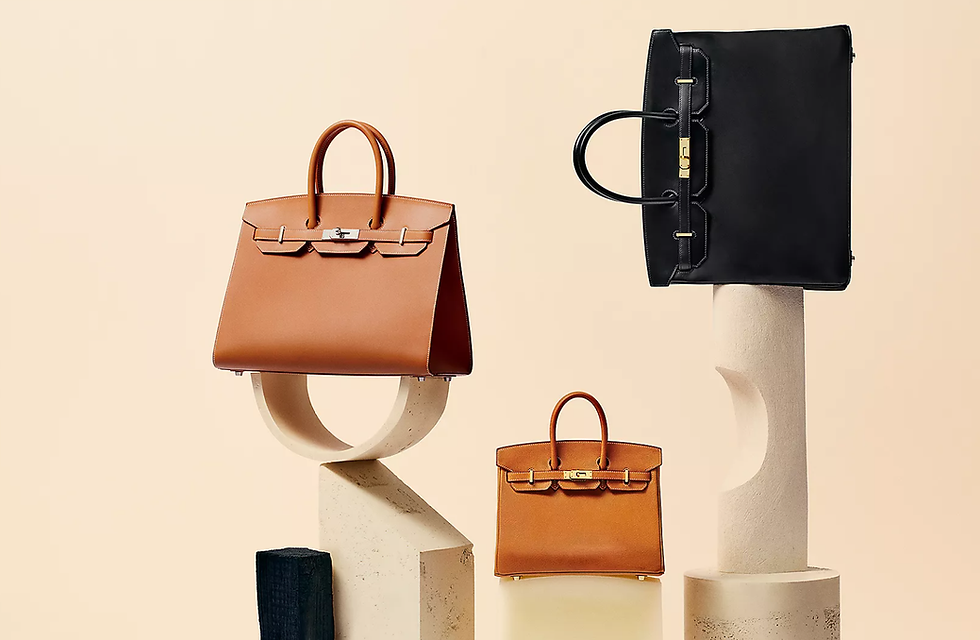
Introduction: The World of Hermès Birkin
When the conversation turns to true luxury, few names command as much respect as Hermès—and within its universe, the Birkin bag stands as the ultimate icon. More than a handbag, the Hermès Birkin is a cultural symbol, a status marker, an investment asset, and a masterclass in brand storytelling.
Crafted by hand, protected by scarcity, and elevated through legacy, the Birkin is not marketed like other luxury products. It is whispered, not advertised. Desired, not displayed.
What This Blog Is About

This blog explores the complete Hermès Birkin bag collection—from the classic Birkin to limited artistic editions—through the lens of marketing, branding, and consumer psychology.
At Pixmagic, we believe that great brands don’t sell products—they sell meaning. And no product demonstrates this better than the Birkin.
If you’re a brand owner, designer, marketer, or entrepreneur, this is not just a fashion story—it’s a blueprint for timeless luxury marketing.
Table of Contents
1. The Birth of the Birkin: A Story, Not a Strategy

The Hermès Birkin was born in 1984 from a chance conversation on a flight between actress Jane Birkin and Hermès chairman Jean-Louis Dumas. Jane needed a bag that was elegant yet practical for daily life. Dumas sketched the design mid-air.
This origin story is not just history—it is marketing gold.
The Birkin was never “launched.”It emerged from a human moment—Jane Birkin needing a practical bag.
Hermès didn’t reverse-engineer demand. They documented a real problem and crafted a solution rooted in empathy.
This origin story:
humanizes extreme luxury
removes artificial aspiration
makes the brand feel earned, not engineered
Luxury buyers don’t want perfection.They want proximity to authenticity.
2. The Classic Hermès Birkin Bag

The classic Birkin is the foundation of the entire collection. Structured yet supple, spacious yet refined—it was designed for real life, not red carpets.
Yet today, it is one of the most expensive and sought-after luxury handbags in the world.
Hermès never positioned the Birkin as a “luxury statement.”They positioned it as a functional companion. Scarcity, craftsmanship, and time did the rest.
Hermès deliberately avoids feature lists, material flexing, and technical explanations because explanation, in luxury, often lowers perceived value. When a brand explains too much, it signals the need for validation and subconsciously seeks approval from the audience.
True luxury does not justify itself; it assumes alignment. Instead of selling specifications, Hermès communicates values such as patience, craft, restraint, and timelessness. These values operate as silent filters—naturally repelling audiences who seek quick gratification or price-based logic, while attracting those who resonate with depth, legacy, and meaning.
This belief-led communication allows the brand to remain selective, confident, and culturally elevated without ever needing to convince.
3. Limited Edition & Artistic Birkin Bags

Limited edition Birkins blur the line between fashion and fine art. These pieces are often created in collaboration with artisans, special materials, or conceptual themes.
They are not mass-produced.They are released quietly.
Hermès does not manufacture scarcity through countdown timers, limited-time offers, or hype-driven drops. Scarcity exists as a natural outcome of how the brand chooses to operate—production is intentionally slow, craftsmanship is deeply human, and access is built on relationships rather than transactions.
This approach transforms buying into a rite of passage instead of a retail experience. People don’t desire a Birkin simply because it is rare; they desire it because not everyone can have it, even if they can afford it.
That distinction shifts ownership from consumption to belonging, and it is this controlled access—not artificial limitation—that elevates the Birkin into a symbol of true luxury.
4. Birkin Faubourg & Decorative Interpretations

The Birkin Faubourg and decorative editions represent Hermès’ most playful creativity—featuring embroidery, architectural motifs, and artisanal detailing inspired by the Maison’s Parisian roots.
These are not “design experiments.”They are cultural artifacts.
Each Birkin is handcrafted by a single artisan, and this fact is never positioned as a boast but as a core part of the brand’s identity. By emphasizing the human hand behind every bag, Hermès turns craft into its signature move—choosing consistency over speed, mastery over scale, and pride over productivity.
This approach builds trust without the need for testimonials or exaggerated claims. The process itself becomes proof, allowing quality to be felt rather than explained, and reinforcing the idea that true luxury is defined by how something is made, not how loudly it is marketed.
5. The Birkin 3-in-1: Quiet Innovation

The Birkin 3-in-1 introduces modular functionality—transforming from a tote into a clutch—without ever calling itself “innovative” or “multi-functional.”
Hermès never explains it loudly.They let discovery do the talking.
Hermès uses silence as a deliberate strategy through minimal advertising, selective visibility, and a restrained digital presence. This quiet approach creates intrigue, authority, and cultural weight, allowing the brand to feel confident rather than attention-seeking. When a brand speaks less, every appearance feels intentional and considered, reinforcing its value and seriousness.
Noise, by contrast, dilutes perception and erodes prestige, making even premium offerings feel ordinary. Hermès proves that in luxury, restraint is not absence—it is power.
6. Exotic & Heritage Leather Birkins

From Togo and Clemence to exotic skins, Hermès leathers are chosen for character, longevity, and aging beauty.
Each bag develops a patina unique to its owner.
The Birkin appears in films, at auctions, within art collections, and in whispered conversations—not because Hermès actively pushes it, but because culture pulls it in. This organic presence makes the product feel inevitable rather than marketed, as if it naturally belongs in these spaces.
By allowing culture to adopt the Birkin instead of forcing visibility, Hermès ensures the bag carries cultural legitimacy and timeless relevance, proving that true luxury is discovered, not advertised.
7. What Brands Can Learn from the Birkin Collection

Across every Birkin variation, Hermès applies the same unwavering marketing principles: story always comes before selling, scarcity exists without pressure, craft is valued over trends, silence is chosen over noise, and access matters more than availability.
This strategic restraint is what protects the Birkin’s mystique and ensures that its resale value, cultural relevance, and desirability continue to grow decade after decade.
By resisting short-term tactics in favor of long-term meaning, Hermès demonstrates that the most powerful marketing move is often knowing what not to do.
Conclusion

At Pixmagic, we don’t believe in loud marketing.We believe in meaningful branding.
Just like Hermès:
We build stories before campaigns
We design brands before selling products
We create desire before demand
Whether it’s luxury, lifestyle, fashion, interiors, or personal brands—we help you market with intention, not imitation.


